

A Place shaped by time


Four Walls in Chianti
“Complimenti!” she said. Confused, I replied, “What?” We were outside as the remaining light faded on a cold, damp November evening — the kind you feel in your bones. Typical weather for Tuscany after the olive harvest. There was nothing romantic about this moment. Our general contractor had just finished a walk through and behind us was a pile of rubble that had once been a roof, floors, and wall plaster. As I turned around, Marta said — half sarcasm, half fear, with a pinch of how did I let you convince me to do this — “You bought four walls in Chianti!” Wrapped in scaffolding before us were those four walls. We were six months into this project, and I remember wondering whether this was a dream — or a nightmare.

A Literary Terroir
Sant’Andrea in Percussina sits on one of Chianti’s first hills, keeping quiet watch over the city of Florence. Like many small towns, its stories are both written and lived — some recorded in books, others passed from one generation to the next. La Pia’s story stretches back centuries, passing through the pages of Dante’s Divine Comedy, Machiavelli’s The Prince — written on Via Faltignano during his exile from Florence — and Piero Calamandrei’s Inventario della casa di campagna (The Inventory of the House in the Countryside). Growing up on different continents, they came to recognize that their family gatherings felt the same — spoken in different languages. Home-cooked meals, shared over wine, with laughter filling those tables. Every enduring place begins with an idea and is shaped gently over time. La Pia grew from those memories and a dream shared quietly. For nearly five years, Joe and Marta drove past La Pia on Sunday mornings on their way for fresh schiacciata, from a local bakery. Over time, they began to wonder about that stone house behind those gates — and the stories she might tell. What was once a dormant farm gently sprang back to life. After years spent between Paris, Zurich, and Florence, they returned to La Pia, where the table waits for new friendships to form.


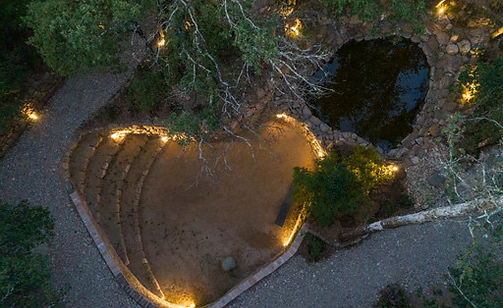
il bosco de’ La Pia
lmagined as an escape one could go to and step away from the worries of the world. It was shaped by human hands, then left to time and allowed to weather. With time, paths softened, clearings closed, and the wood slowly folded back into itself. For a long while, the Bosco remained quiet — remembered rather than tended. With careful attention to its history, it was gently cared for once again. Today it remains an escape where one can step away from the noise of elsewhere and move at a different pace.

Pia People
La Pia is cared for by a small group of people who know the land well and live in step with its seasons. Some have spent their entire lives on these hills; others arrived more recently and chose to make them their home. Together, they listen, maintain, and prepare La Pia to be shared — moving with a natural ease, and with care for those who came before them. Their work is quiet by design. It allows the place to remain itself.
